Universal-Scale Biomolecular Detection via a Single Sensor Enabled by Designing the PEG-lipid Corona Phase
-
Affiliation
Sungkyunkwan University School of Chemical Engineering
-
E-Mail
sooyeonc@skku.edu
- Homepage
Award-winning achievements
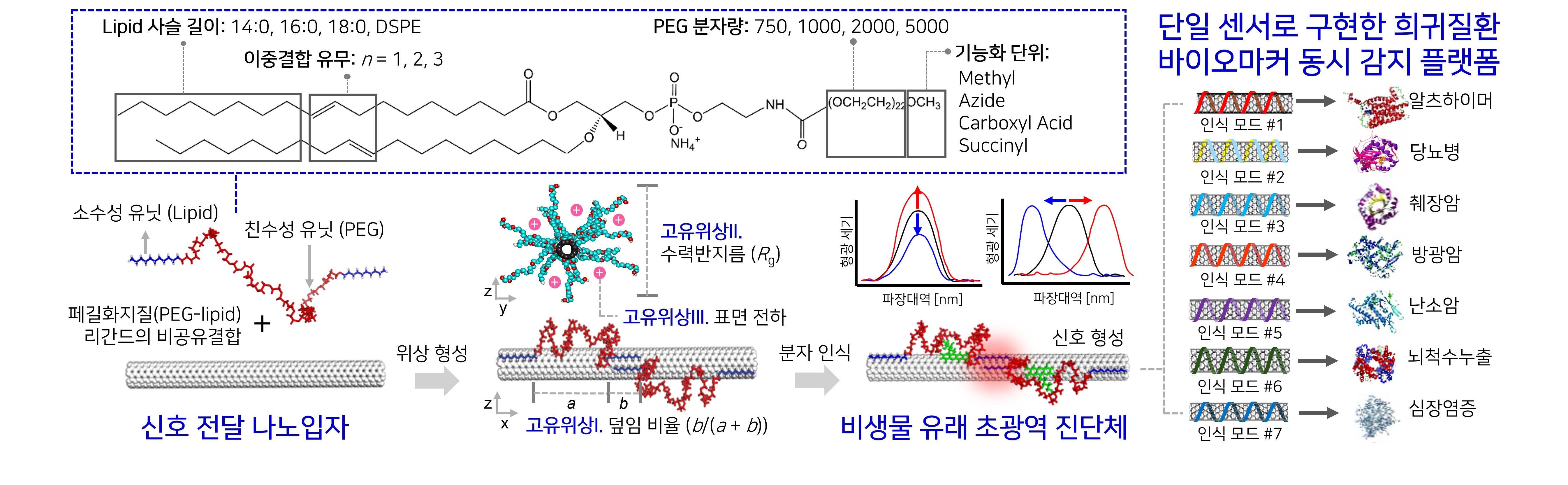
One of the harsh challenges in advanced biotechnology is the ability to detect biomolecules of all scales on a single platform. Currently, this ability does not exist. Professor Sooyeon Cho's research aims to address the fundamental structural limitations of traditional sensory body development by shifting the underlying theory completely.
In order to create a "High stable and fully artificial biochemical sensor" that does not require animal cell synthesis, the phase space formed by pegylated lipid polymers and single-walled carbon nanotubes (SWCNTs) is defined as a function of the minimum energy theory of quantum mechanics. Based on this, she aims to develop a universal sensor technology capable of detecting target molecules of any size or shape.
Attempting to universally detect biomolecules using PEG-Lipid/CNT composite libraries is challenging but could become a new platform technology in biosensing, if successful.